
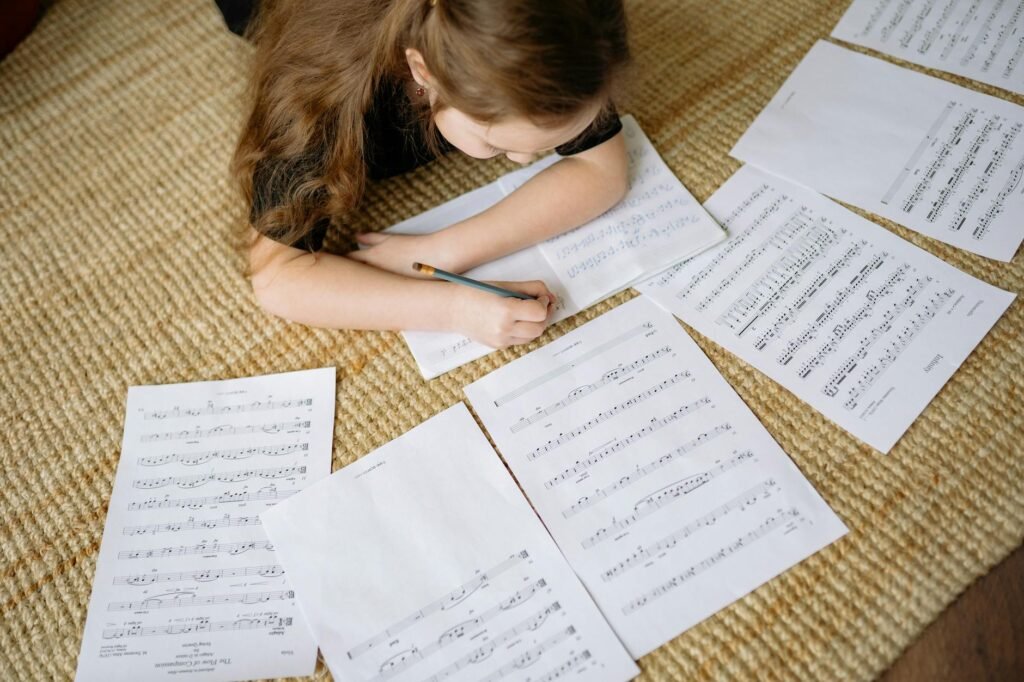
Almost never does an intermediate level musician stall out due to lack of interest. They typically stall because they’ve practiced so often that their practice has gradually devolved into performing pre-set material they already have, and the session feels good, sounds fine, and supports the idea that they have spent their time wisely. However, if you do most of your repetitions only within the limits you already have mastered, your level of fluidity while performing will increase, but you won’t increase your range, speed and/or dependability under pressure.
That trap has a name here: comfort-zone practice. It is not the same as warming up, maintaining repertoire, or playing for enjoyment. The problem is proportion. When the bulk of a session is spent repeating the familiar, you optimize for short-term fluency instead of durable learning. Research in music and motor learning helps explain why: blocked repetition often improves immediate performance, while more effortful structures such as interleaving, retrieval, and deliberate-practice-style work tend to produce better retention and transfer. (pubmed.ncbi.nlm.nih.gov)
TL;DR
- The sticking point is often not laziness or lack of hours. It is spending too much practice time on material that already feels manageable.
- If a session makes you feel good but gives you no clear evidence of change, it was probably too comfortable.
- Use the Comfort-Zone Leak Audit to score a practice session and catch low-return repetition early.
- Verify improvement with cold starts, delayed retests, transfer tests, and occasional recordings instead of trusting the best rep of the day.
What the habit actually looks like
Intermediate players typically have good comfort zone practices, such as: starting at the top of the piece; repeating the section they performed well on the previous day; increasing tempo until the technique almost breaks down; and ending with something that reminds them that they are capable. All of these habits are good practices individually. However, the most challenging 5-10% of their skill does not receive sufficient direct, measurable attention in their practice routine.
- You always begin at bar 1 instead of at the actual breakdown point.
- You repeat the same four bars the same way until they feel easier, but never test whether they hold up after a break.
- You judge progress by whether the last rep sounded decent, not whether the first cold rep improved.
- You keep tempo as the only difficulty lever instead of adjusting rhythm, articulation, range, fingering, sticking, or breath plan.
- You leave the session relieved, but you cannot say exactly what got better.
Why this feels productive even when it is not
Comfort-zone work feels productive because blocked repetition makes the brain and body more efficient within the session. A passage often sounds better on rep eight than on rep one. But music-learning studies and broader motor-learning research suggest that alternating tasks, varying conditions, and forcing reconstruction can create more durable learning even when practice itself feels messier. In other words, a session that feels worse in the moment can lead to better results next week. (pubmed.ncbi.nlm.nih.gov)
There is a limit, though. Productive difficulty is not the same as chaos. The challenge point framework argues that practice conditions should match both the learner and the task: too easy and you get little useful information; too hard and the signal gets buried in overload. That is why some intermediate musicians bounce between under-challenged repetition and impossible tempos and learn little from either one. (pubmed.ncbi.nlm.nih.gov)
Use the Comfort-Zone Leak Audit
At the end of a practice session, give yourself one point for every statement that is true. This is a quick way to tell whether the session built skill or mostly protected confidence.
- More than half of the session went to material you can already play at roughly 85 to 90 percent accuracy.
- You repeated the same fix more than three times without changing tempo, rhythm, fingering, articulation, sticking, breath plan, or entry point.
- You never did a cold start from the trouble bar, entrance, shift, lick, or phrase.
- You never tested the passage in a second context, such as a different tempo, dynamic, subdivision, starting beat, or key.
- You stopped after one good rep instead of proving it again later in the session.
- You cannot name one measurable gain in plain language.
A realistic example: plenty of time, weak return
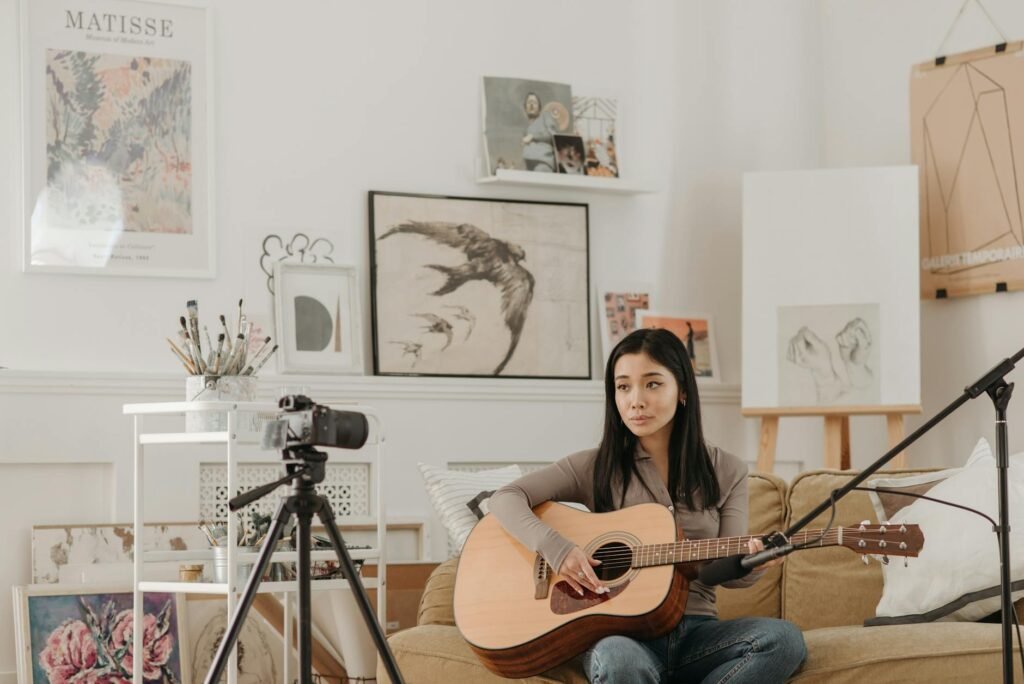
Consider Maya, an intermediate guitarist who practices 40 minutes a day, five days a week. That is 200 minutes a week, or about 13.3 hours a month. She also pays $180 a month for weekly lessons. If 25 of her 40 daily minutes go to songs and sections she can already get through cleanly, then roughly 62.5 percent of her practice budget is maintenance. Over one month, about 8.3 of her 13.3 practice hours confirm existing ability instead of fixing the recurring breakdown: a bar-to-bar shift at 92 BPM. Over 12 weeks, that is almost 25 hours of low-return work, plus three months of lessons spent circling the same issue.
| If your session looks like this | What it usually means | Better next move |
|---|---|---|
| You play the whole piece from the top every day | You are rehearsing performance flow, not repairing the bottleneck | Start at the weak transition first, then earn the full run-through later |
| You repeat a passage 10 times the same way | You are chasing smoothness inside the session | After 2 to 4 reps, change one variable such as rhythm, accent, fingering, or entry point |
| You stop once it works one time | You are trusting a peak rep | Require three successful reps separated by interruption |
| You only raise the metronome | You are treating speed as the only form of challenge | Also adjust range, dynamics, subdivision, coordination load, or starting beat |
| You save the hardest material for the end | You are protecting confidence with easier work first | Attack the exposed problem in the first third of the session while attention is highest |
The results can vary greatly depending on how you spend your time, and the way you learn will ultimately determine your level of development. A lot of intermediate players will also have enough time to make progress through practice; however, they do not yet have a consistent method or standard to help them determine which minutes of practice are meaningful.
Build a session that creates transfer, not just relief
- Write one narrow target. Example: “Clean the shift into bar 17 at 76 BPM without rushing,” not “work on the piece.”
- Find the challenge point. Start where errors are present but readable, often 5 to 15 BPM below collapse tempo or at a reduced coordination load.
- Use short reps with a change. Try the passage 2 to 4 times, then vary one condition: rhythm, accent, articulation, fingering, sticking, breath, or entry point.
- Interleave a second task. Rotate between the problem passage and a related demand so you cannot run on autopilot.
- Add a retrieval rep. After a short break or unrelated drill, come back cold and see whether the fix is still there.
- End with proof, not relief. Require three successful reps separated by interruption, then one recorded rep.

This structure works because it forces attention, comparison, and recall. It also creates feedback you can use. In music teaching research, effective feedback is not just “good” or “again”; it helps the player see where they are, what changed, and what the next adjustment should be. Practice journals, self-observation, and targeted goal setting can strengthen that loop. (ies.ed.gov)
Common mistakes that keep the loop going
- Confusing warm-up with the main event. A comfortable scale or groove may prepare you, but it should not quietly take over the session.
- Letting tempo become the only goal. Many problems are really about coordination, tension, timing, or setup.
- Judging progress by the best rep instead of the average cold rep.
- Practicing the whole piece to avoid one exposed transition, entrance, or shift.
- Keeping no log, so every session restarts the same diagnosis.
- Treating physical pain as proof of discipline. Pain, numbness, or loss of control is a warning sign, not a badge.
When the first fix is not enough
Some sessions need a backup plan. If interleaving makes the passage completely fall apart, the answer is not to retreat to pure comfort. Use micro-blocks instead: two or three focused reps on one version, then switch. If a performance deadline is close, shift some time back to run-throughs, but keep a small daily slot for the weak link so maintenance does not swallow repair. And if the issue is tension, pain, or numbness, stop treating it as a practice puzzle and get qualified instruction or medical guidance. (pubmed.ncbi.nlm.nih.gov)
- If the error source is unclear, slow down enough to label it: timing, coordination, pitch, tone, memory, or setup.
- If frustration spikes, shrink the target to one beat, one shift, one entrance, or one breath.
- If you plateau alone, bring one recording and one written question to a teacher instead of asking for general help.
- If motivation is dropping, reserve 10 to 15 percent of the session for pure enjoyment so the plan stays sustainable.
How to verify that the advice is working
The fastest way to fool yourself is to evaluate practice while you are still inside it. Verify progress later, under slightly different conditions. That approach fits both retrieval-based learning and self-regulated practice research: the useful question is not whether the passage worked after ten straight attempts, but whether you can reconstruct it when the cue is weaker and the pressure is a little higher. (ies.ed.gov)
- Cold-start test: begin from the exact trouble spot with no lead-in.
- Delay test: retry it at the end of the session or the next day.
- Transfer test: change one variable, such as tempo, dynamic, articulation, key, or starting beat.
- Recording test: capture one rep and write one sentence on what held up and what did not.
- Outside check: every week or two, let a teacher, ensemble partner, or trusted peer hear only the problem area.
Bottom line
Intermediate musicians being held back by comfort zone habit due to being rewarded with the sense of productivity versus actually producing results. The amount of hours practiced is irrelevant to moving forward; instead, you need to focus on reps that are honest, have good variance between them and are assessed in terms of progress. If you can’t go from a cold start, wait some time or change the way you do something and it doesn’t ruin your previous sessions – it was probably only helpful as opposed to beneficial.
FAQ
How uncomfortable should practice feel?
Enough that mistakes give you information, not so much that every rep collapses. If you cannot describe what failed, the difficulty is probably too high. That is the practical version of finding the right challenge point. (pubmed.ncbi.nlm.nih.gov)
Is interleaving always better than repetition?
No. Blocked repetition can help you understand a new motion or sound. The problem is staying there too long. Research generally suggests interleaving and variation are stronger for retention and transfer, but the best mix depends on skill level and task difficulty. (pubmed.ncbi.nlm.nih.gov)
Should I stop playing whole pieces from start to finish?
Run-Throughs are an important contributor to Stamina, Memory, and Interpretation, but they are NOT the only thing that should make up your practice time – which should also be about fixing weak links in your ability to interpret. A good goal is to earn as many complete “Plays” as you can after testing your “Narrow” target for the day.
What if I only have 20 minutes?
Use 12 minutes for one bottleneck, 5 minutes for a related contrast task, and 3 minutes for a cold retest or recording. Short sessions can work well because they force clearer priorities.
Do I need a teacher for this to work?
Not always, but outside feedback can speed diagnosis. Music education research emphasizes feedback that clarifies current performance, next steps, and self-regulation. If you do not have a teacher, a recording plus a written log is the next-best substitute. (pmc.ncbi.nlm.nih.gov)
References
- Optimizing Music Learning: Exploring How Blocked and Interleaved Practice Schedules Affect Advanced Performance – https://pubmed.ncbi.nlm.nih.gov/27588014/
- Deliberate Practice and Proposed Limits on the Effects of Practice on the Acquisition of Expert Performance – https://pmc.ncbi.nlm.nih.gov/articles/PMC6824411/
- Retrieval-Oriented Learning Strategies | Institute of Education Sciences – https://ies.ed.gov/use-work/awards/retrieval-oriented-learning-strategies
- Challenge Point: A Framework for Conceptualizing the Effects of Various Practice Conditions in Motor Learning – https://pubmed.ncbi.nlm.nih.gov/15130871/
- Feedback in Music Performance Teaching – https://pmc.ncbi.nlm.nih.gov/articles/PMC9251491/
- Performing at the Top of One’s Musical Game – https://pubmed.ncbi.nlm.nih.gov/27679586/