
TL;DR
- Same-session smoothness is not the same as next-day learning. In trained pianists, fixed-order practice looked better during acquisition, but random-order practice led to better retention 48 hours later. (pubmed.ncbi.nlm.nih.gov)
- In an applied study of advanced clarinetists, interleaved practice was often rated better on later performance, and players reported better focus, goal setting, and mistake identification. (frontiersin.org)
- Recording yourself and checking one clear variable is usually more useful than mindless extra reps. A 2025 piano study found self-listening changed how players rated their second performance, even though outside raters did not always hear the same gains. (pmc.ncbi.nlm.nih.gov)
- Practice time still matters, but the quality of attention, self-regulation, and goal-directed work changes how much that time actually predicts achievement. (journals.sagepub.com)
- Blocked repetition is not useless. It is often most helpful as a short setup phase before a delayed retest, not as the entire session. (frontiersin.org)
A lot of musicians work hard and still feel oddly stuck. They can play a passage better on rep 12 than on rep 1, but the next day the same weakness is back: the rhythm rushes, the shift misses, the articulation smears, the phrase sounds less secure than it felt in the room. That is not laziness. It is usually a practice-design problem. Fixed repetition can make performance feel smoother in the moment because the task is still fresh, but that short-term fluency can hide what has not actually been learned. (pubmed.ncbi.nlm.nih.gov)
Research on trained pianists helps explain the trap. In one study, players practiced melodies in either fixed or random order. Fixed-order practice produced faster performance during acquisition, but random-order practice led to better performance on a retention test two days later. In other words, the easier method looked better during practice and worse when memory actually mattered. (pubmed.ncbi.nlm.nih.gov)
A more applied music example points in the same direction. In a study of 10 advanced clarinetists, pieces practiced in an interleaved schedule were rated better whenever the two schedules separated, and many players said interleaving improved goal setting, focus, and mistake identification. A separate motor-sequence study found that interleaved practice required more coordination across attention and sensorimotor systems, and those differences tracked with later learning benefit. The broader lesson is simple: practice that feels harder can produce more durable skill. (frontiersin.org)
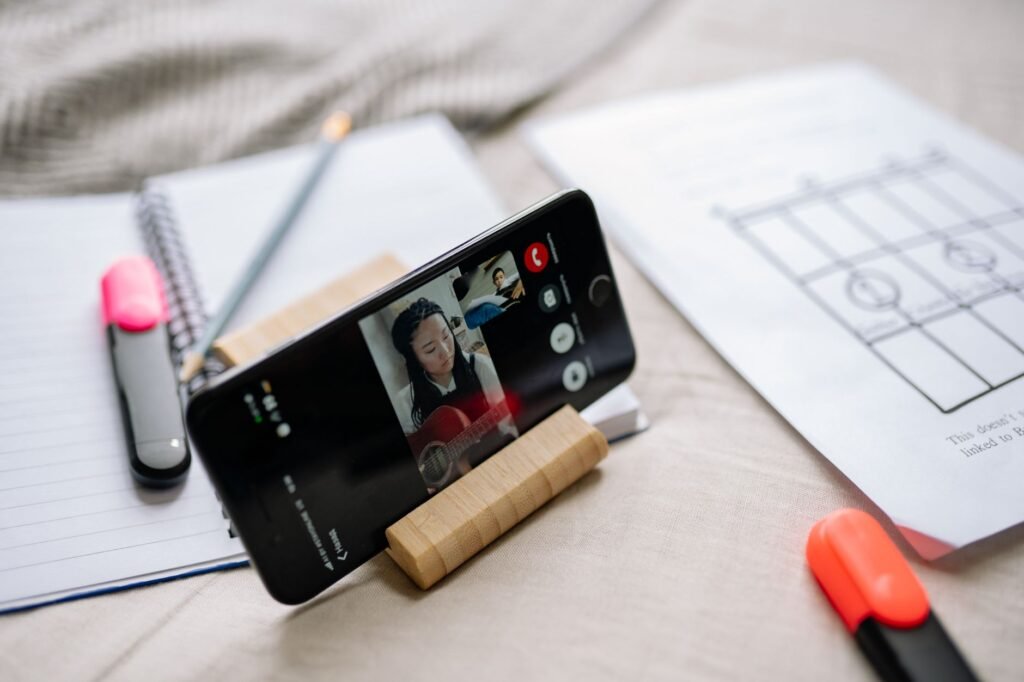
Why repetition can feel productive and still underdeliver
The key distinction is performance versus learning. Performance is what you can do while warmed up, adapted, and still carrying the memory of the last few tries. Learning is what survives a delay, transfers to a new tempo, or holds up when you start cold tomorrow. Musicians often judge their practice by end-of-session comfort, but the research above shows that comfort is a weak audit tool. If the method makes you feel smooth right now but leaves you fragile later, it is improving performance more than learning. (pubmed.ncbi.nlm.nih.gov)
Evaluation changes the job of practice. Instead of asking, “Can I make this feel easier if I do it again right away?” you ask, “What exactly broke, what caused it, and does the fix survive after I leave it alone for a bit?” That shift matters because it forces retrieval, comparison, and error detection. Those processes are effortful, which is one reason better practice can feel worse while you are doing it. That is a reasonable inference from the retention findings and the added attentional demand seen in interleaved motor learning studies. (pubmed.ncbi.nlm.nih.gov)
Use the RATE Practice Loop
Here is a practical framework you can use right away: the RATE Practice Loop. RATE stands for Record, Audit, Tweak, Exit test. It is built for passages that keep returning with the same problems. The point is not to eliminate repetition. The point is to make every repetition answer a question. That is how evaluation starts doing the work that brute-force volume often cannot. This framework is an editorial tool built from the research idea that durable improvement depends on retention checks, task switching, and self-observation rather than same-minute fluency alone. (frontiersin.org)
| Step | What to do | What you are evaluating | Stop when |
|---|---|---|---|
| Record | Play the passage once without stopping. If possible, capture audio or video. | Cold accuracy, rhythm drift, tension, memory slips, tone changes | You can name the single biggest problem |
| Audit | Choose one variable only: rhythm, pitch, coordination, tone, tension, phrasing, or memory. | Cause instead of symptom | You can finish the sentence: “The problem is mostly ___” |
| Tweak | Do 2 to 4 focused reps with one change at a time. | Whether that one fix actually moves the result | One measurable thing improves |
| Exit test | Leave the passage for 5 to 10 minutes, then come back cold. | Retention, transfer, and stability | The gain survives after the reset |
The single rule that makes the system (RATE) function is that you should not repeat a section unless you have justifiable reasons for doing it; “again” is not a justification. For example, “again – as the left-hand jump was performed late in conjunction with the other jumps.” The more specific your diagnosis is, the less frequently you will need to make any repetitions.

A 45-minute example: eight targeted reps instead of 22 automatic ones
Consider a realistic composite example. Maya is an adult pianist taking a $60 weekly lesson and practicing 45 minutes on weeknights. She is working on a 16-bar passage that keeps falling apart at bar 9. Her old method is familiar: play the whole section 20-plus times, feel better by the end, then lose the gain by the next lesson.
When she starts with RATE, she has one cold recording at 76 bpm. There were three concrete issues: hesitation before the left-hand jump on bar 9; shoulders rising during the leap; and rushing the eighth-note figure with the right hand. For the first cycle, she has selected only one target: the left-hand jump. She completes two silent landings, then two slow hand-to-hand at 68 bpm followed by one full recording. After an unrelated 10-minute practice, she returns for a cold retest. Total repetitions on the target passage: 8. Result: 1 hesitation compared with 3; less visible tension; and a clear next target for tomorrow.
The benefit is not only that she performed fewer repetitions but also that the results provided her with cleaner information as well. She now understands specifically how she improved or did not improve, in addition to where to put her focus for the next improvement in her training. This improved information also increases efficiency in her future paid instruction, as the next lesson may address unresolved issues instead of rediscovering her earlier mistakes.
How to choose the right mix of repetition and evaluation
| If your problem is… | Start with | Then switch to | Why this mix works |
|---|---|---|---|
| Brand-new fingering or sticking pattern | 2 to 4 blocked reps | A cold retest after a short break | You need a first template before evaluation becomes meaningful |
| A passage that sounds good today but collapses tomorrow | Interleaved work or a delayed retest | Short targeted reps only on the weak spot | This exposes whether the gain actually sticks |
| You keep missing the same spot and do not know why | One recording plus one-variable audit | 2 to 3 experiments with a single change | Diagnosis usually beats volume |
| You are near performance week | Full run-throughs with post-run notes | Targeted repair between runs | Concerts do not allow endless stop-start repetition |
| You feel physical strain or rising panic | Pause, slow down, and reduce load | Teacher feedback, technique check, or medical help if needed | More reps can reinforce tension or pain |
The cheapest feedback tool is already in your pocket
If you want one low-cost upgrade, start recording short segments of your practice. A 2025 study of advanced piano students found that listening back to a recording changed how students rated their second performance in areas such as rhythm, interpretation, and expression. But outside raters did not hear the same clear improvements. That is a useful caution: self-recording is powerful because it sharpens self-observation, not because it replaces outside feedback. Use it to catch what you missed, then pressure-test your judgment against a teacher, coach, or blind comparison when possible. (pmc.ncbi.nlm.nih.gov)
Common mistakes that keep musicians stuck
- Evaluating everything at once. If you listen for rhythm, intonation, tension, tone, and expression in the same pass, the review gets vague fast.
- Recording every rep. That usually creates clutter, not clarity. One baseline and one retest is often enough.
- Treating tempo as the only score. A faster run is not a better run if tension, unevenness, or memory fragility also increased.
- Stopping after every error. That can train interruption instead of recovery. Some reps should continue so you can hear how the error affects the phrase.
- Mistaking frustration for failure. Harder practice often feels less flattering because it reveals more.
- Never checking tomorrow. If you do not test retention, you are guessing.
When this approach is not enough
There are real limits. Beginners often need a short block of repetition just to build a usable movement plan before self-evaluation becomes productive. And not every spacing or interleaving result is universal. In one piano-learning study with novices working on a 17-note sequence, researchers did not find spacing benefits under those conditions. That does not erase the larger pattern, but it does mean you should treat these ideas as strong defaults, not rigid laws. (pmc.ncbi.nlm.nih.gov)
There is also the human factor. Anxiety, fatigue, perfectionism, and poor body awareness can distort evaluation. A 2023 study in expert pianists linked anxiety measures with practice behaviors and performance quality, which is a reminder that more monitoring is not always better monitoring. If evaluation turns into spiraling self-criticism, shorten the cycle, narrow the target, and bring in an outside teacher sooner rather than later. (pubmed.ncbi.nlm.nih.gov)
Run one evaluation-heavy practice session
- Warm up for 3 to 5 minutes without touching the problem passage.
- Play one cold run and record it.
- Write down one target only: for example, late shift, unstable subdivision, pinched tone, or memory gap.
- Do 2 to 4 reps aimed at that one target.
- Leave the passage alone and work on something else for 5 to 10 minutes.
- Return for one cold retest.
- Log what held up, what fell apart, and what the first target should be next session.
How to verify that the method is actually working
Do not trust your memory of how practice felt. Audit the results. The most reliable check is a cold-start comparison over at least one to two weeks. That matches the logic of the research: immediate gains can fade, and self-ratings can drift from outside judgments. Real improvement should show up after a delay and in recordings you can compare without relying on mood or momentum. (frontiersin.org)
- Use the same passage, same tempo target, and same recording setup each time.
- Count specific errors instead of using a fuzzy label like “better.”
- Keep one cold-start recording from the start of week 1 and one from the end of week 2.
- If possible, ask a teacher or trusted musician to compare two unlabeled clips.
- If the gain only appears at the end of a session and disappears the next day, your practice likely still needs more evaluation and less autopilot repetition.
Bottom line
Musicians who learn quickly can do so through less repetition, provided they do not waste their practice time on nonproductive music experiences. Short time intervals with the use of repetition and records of delayed return result in the most effective means of measuring musical progress. Rather than counting the number of times you have played it in order to learn how to play well, focus on what each repetition taught you.
Frequently asked questions
Is repetition bad for musicians?
Repetitions are an aid, they are not the cause of the issue. Using repetitions for no reason at all is a problem. A few blocked repetitions can assist with figuring out fingering, bowing, sticking or coordination, but the trouble occurs when you do not check all out at the end of the session and you only have automatic repeatable accomplishments in that session and there was no diagnosis or result has been delayed.
How often should I record myself during practice?
For most passages, one baseline recording and one retest are enough. More than that can create review fatigue. The goal is to compare two meaningful checkpoints, not to build an archive you never study.
Does this work for beginners, or only advanced players?
It’s effective for either case, but novice players generally require shorter target lengths and somewhat more set-up repetition for each target before being able to evaluate themselves effectively. Before evaluative self-training can become meaningful for a complete novice to the game, they may first need to learn the actual notes/movements. While bloody beginners could find evaluating themselves (even by means of simple checks like count of rhythms, tension notes, or cold-starts) useful, when the most basic layout has been established/created.
What if I do not have a teacher?
Even when using the RATE loop along with a phone recording, practice logs, and occasional blind listenings by a trusted musician friend, you must remember that your self-ratings may not be completely objective. Outside ears can still be very useful.
How long should one evaluation cycle last?
As a starting point you should expect to have 5-15 minutes before beginning the cycle of conducting 1 recording or task repeat, followed by 1 audit repeat, then doing 2-4 repped of focused task/effort, and finishing with a delayed re-test of the same task after doing some other work during the interim period of time. If the task you attempted was complex in nature then longer cycles maybe acceptable; otherwise, once your notes become vague you have likely gone too long into your task.
What is the clearest sign that I need more evaluation and less repetition?
If a passage feels fixed at the end of practice but fails on a cold start the next day, that is the signal. You are likely improving temporary performance more than durable learning.
References
- Abushanab & Bishara (2013), Memory and metacognition for piano melodies: illusory advantages of fixed- over random-order – https://pubmed.ncbi.nlm.nih.gov/23508339/
- Carter & Grahn (2016), Optimizing Music Learning: Exploring How Blocked and Interleaved Practice Schedules Affect – https://www.frontiersin.org/articles/10.3389/fpsyg.2016.01251/full
- Lin et al. (2013), Interleaved practice enhances skill learning and the functional connectivity of fronto-parietal – https://pubmed.ncbi.nlm.nih.gov/22359276/
- Nusseck et al. (2025), Effects of audio feedback interventions with the Disklavier on the performance of piano students – https://pmc.ncbi.nlm.nih.gov/articles/PMC12078165/
- Bonneville-Roussy & Bouffard (2015), When quantity is not enough: Disentangling the roles of practice time, self-regul – https://journals.sagepub.com/doi/10.1177/0305735614534910
- Wiseheart, D’Souza & Chae (2017), Lack of spacing effects during piano learning – https://pmc.ncbi.nlm.nih.gov/articles/PMC5553926/
- Passarotto, Worschech & Altenmüller (2023), The effects of anxiety on practice behaviors and performance quality in exp – https://pubmed.ncbi.nlm.nih.gov/37077842/